Est. 2024 · Official Bureau Communication
The Beaufart™ Bureau
Measuring what matters, one emission at a time.
The world's foremost institution for the scientific classification of gaseous emissions. From Calm (0) to Hurricane (12), we bring peer-reviewed rigour to the art of the fart.
The Official Scale
Bureau-certified classification system · Inspired by Sir Francis Beaufort's wind force scale of 1805
Calm
The air is perfectly still—no movement, no sound, no evidence. And yet, it’s entirely possible something eye-watering has already happened… silently, and with no witnesses.
Light Air
A faint suggestion passes by, barely enough to notice. You pause, reconsider your surroundings, and decide it’s best not to investigate further.
Light Breeze
A gentle hint drifts through—noticeable, but deniable. It lingers just long enough to make you suspicious, then disappears without taking responsibility.
Gentle Breeze
The air moves with intent, brushing past like an uninvited guest. Noses twitch, posture shifts, and suddenly everyone needs “a bit more space.”
Moderate
Something has clearly occurred. Conversation falters as the room collectively pretends nothing is happening. No one wishes to be the first to acknowledge it, which is how these things escalate. If you drop one of these in an elevator, you're a wrong un!
Fresh Breeze
The disturbance arrives with confidence, reaching across the room. Quiet glances are exchanged, and blame begins to circulate silently. People begin making small, unnecessary adjustments to their seating arrangements.
Strong Breeze
Denial is no longer an option. It lingers with purpose, as though it has unfinished business with everyone present.
Near Gale
A forceful event disrupts the atmosphere. Social harmony weakens as people begin reassessing both their neighbours and their choices.
Gale
The air turns hostile and unmistakable. Even those entirely uninvolved feel the need to defend themselves.
Strong Gale
This is no longer a moment—it’s a situation. Escape routes are considered, and eye contact is carefully avoided. Someone opens a window with the urgency of a man disarming a device.
Storm
Chaos sets in. Windows are opened, dignity is abandoned, and survival becomes the priority. Containment is no longer viable. The room begins to reorganise itself around the problem. The definition of “acceptable” is quietly revised.
Violent Storm
An event of remarkable intensity. Eyes water, composure fails, and serious questions are raised about what just happened.
Hurricane
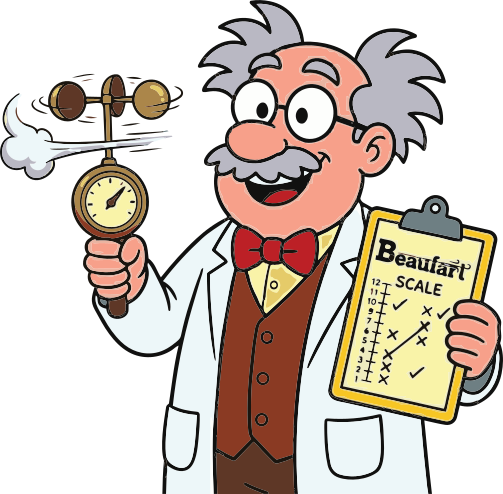
Total devastation. Professor Parp notes that this may not have been entirely wind, and strongly recommends immediate evacuation.
As ratified by the International Bureau of Flatulence, est. 1896. All measurements conducted under controlled laboratory conditions by certified bureau personnel.
Emission Submission
Capture field observations and submit them for official bureau classification.
Honours Board
The bureau recognises outstanding contributions to the field.
The Bureau
Meet the distinguished researchers behind the world's most important scale.
Fart on Demand
The Bureau's state-of-the-art compositional engine for atmospheric audio research.
From the desk of Professor Parp
The Bureau Needs You
Join thousands of field agents documenting atmospheric disturbances worldwide. Your contributions advance the science.
Enlist as a Field Agent